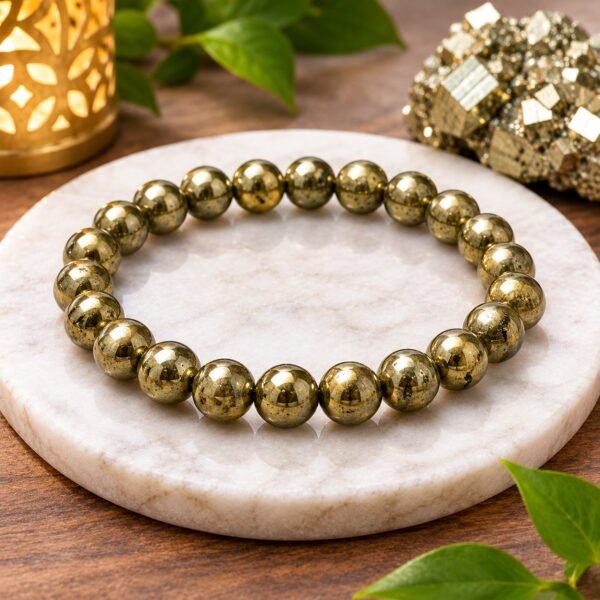
Pyrite looks like gold, which is why prospectors called it “fool’s gold”. In crystal practice it’s the stone of prosperity and willpower, and those natural metallic cubes still surprise people when they first see them.
What is pyrite?
Pyrite is iron sulphide. Its name comes from the Greek word for fire, because it throws sparks when struck against steel, which made it useful for starting fires long before matches.
It often grows as near-perfect cubes, especially at Navajún in Spain, where the cubes look machine-cut. Peru produces glittering clusters, and India has pyrite deposits too. Gold is soft, heavier and bendable. Pyrite is hard, brittle and leaves a greenish-black streak on unglazed tile.
Pyrite meaning and traditional uses
- Prosperity: placed in shops, offices and wallets
- Willpower: sticking with goals and plans
- Protection: its mirror-like shine is thought to reflect negativity
- Confidence: a strong solar plexus stone
How to use pyrite
- Keep a cluster or cube on your work desk or in a shop.
- Combine it with citrine and green aventurine in a money bowl.
- Place a piece in the north area of your home, the direction linked with wealth in Vastu.
Cleansing and care: keep it dry
Pyrite reacts with moisture and oxygen. In damp conditions it can tarnish, rust and release sulphuric acid, which eventually crumbles the specimen (“pyrite decay”). So:
- never wash or soak pyrite, and don’t use it in elixirs or baths
- store it somewhere dry, with silica gel if you live somewhere humid, such as coastal India during the monsoon
- dust it with a dry brush
- wash your hands after handling raw pieces
Cleanse it with smoke, sound or a selenite plate.
Real or fake pyrite?
- Real pyrite is heavy, cold and hard. Painted resin feels light and warm.
- Rub it on unglazed ceramic: real pyrite leaves a greenish-black streak.
- Natural cubes have fine striations on their faces.
Crystals that pair well with pyrite
Citrine and green aventurine for money goals, tiger’s eye for determination, and hematite for grounding.
Frequently asked questions
Why is my pyrite turning white or dusty?
That’s pyrite decay from humidity. Move it somewhere dry right away. Badly affected pieces can’t be saved.
Is pyrite toxic?
Handling it is safe. Don’t ingest it or make crystal water with it.